
Before their appointment for a child development assessment, some parents have questions such as whether their child is going to be asked questions and if this will make the child feel uneasy?
A child development assessment isn’t designed for assessing your child or the way you parent them; rather, it aims to enable experts to find out what your child is good at, how they cope with tasks, and in which areas a little extra help could make a difference.
Before the Appointment, What Should Parents Be Prepared?
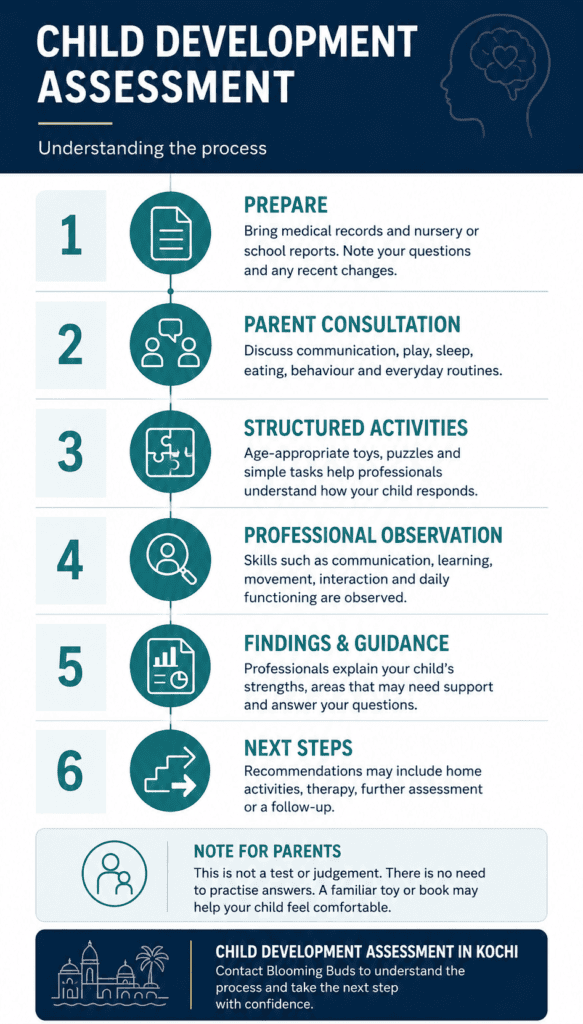
Prior to the assessment, make sure to bring any documents which will enable the experts to get a better understanding of your child, for example medical reports and papers from a nursery or school.
You ought to consider the questions you want to put to the child, and include details regarding the way they talk, the way they play, the way they ask for help, the way they eat, the way they sleep, and the way they cope with everyday routines. Make a note of any changes you have recently noticed.
Bringing along a favourite toy or book can help your child to feel comfortable when they’re waiting. There’s no need to practise answers or prepare them to act in a certain way.
What Happens During the Assessment?
Child’s Behaviour and Routines
The usual procedure is for experts to talk with the parents regarding the child’s behaviour and their daily routines.
They could be asked about your child’s early years, their health, the way they sleep, the way they eat, the way they are dressed, the way they play, their behaviour at school or nursery, and the languages that you use at home.
Your observations are important because only you know your child as well as anyone else does; if your child is notably quiet, shy, or active during the appointment, make sure to let the professionals know about the way they normally behave.
Observing Skills Through Play and Interaction
While carrying out the assessment, experts make use of toys, games, and simple activities in order to discover how your child plays, speaks, and learns as well as the way they interact with other people.
For example, the child could be given a puzzle, asked to carry out simple instructions, handle some objects, or interact with an adult while the professional watches how they cope with each activity.
The way children handle questions regarding what to eat, what to wear and using the toilet also reveals how well they are coping with everyday life, since the approach will differ depending on their age, particular needs and the professionals taking part. In some cases the children will need more than one visit.
What happens after the assessment?
When the assessment is over, the professionals will go over what they have observed. They will discuss your child’s strengths, answer any questions you have, and explain the areas in which your child might need extra support.
On the basis of the results they could suggest home exercises, therapy, or further assessment. It doesn’t follow that one consultation will provide all the answers.
One thing you could do is request a written summary and then check what the next steps are.
Taking The Next Step with Confidence
If you want to obtain a child development assessment in Kochi, you should contact Blooming Buds to find out how the assessment procedure works, what items to bring, who you will be meeting, and how the results will be handed to you.
You needn’t have all the answers or an official diagnosis if you want to take the first step—you only have to state your questions and explain what your child’s daily life is like. Having a child development assessment in Kochi will enable you to understand their needs and together find the right sort of support.
