
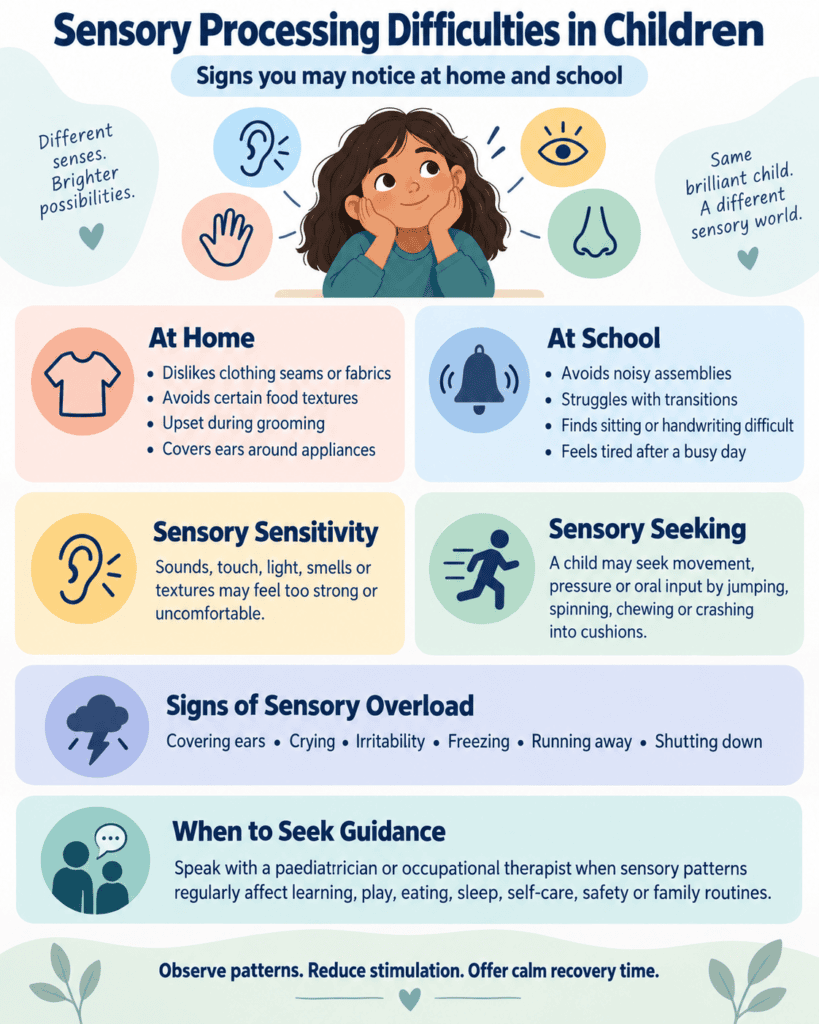
Children see the world through their senses every day. Sounds, touch, movement, light, smell, taste and body awareness all help children respond to the world around them. Some children feel certain sensations more strongly, less strongly or in ways that make everyday activities harder.
Understanding Sensory Processing in Children
Sensory processing is how the nervous system takes in and understands information from the body and the world around us. A child might feel upset by a bell, not like the feel of certain clothes or want to move a lot by jumping and spinning. These reactions can also be different when the child is tired, stressed or in a place.
However, it’s very important to know that one thing a child likes or does not like does not mean they have an issue. So adults should watch for things that happen over and again and think about how these things affect the child’s everyday life.
Signs You May Notice at Home
Sensory issues in children can appear when a child is dressing, eating, grooming, playing or going to bed. For example, a child may resist fabrics, dislike clothing seams, avoid particular food textures or become upset during hair washing or tooth brushing.
Meanwhile, household sounds can also be hard for a child. A child may cover their ears when a mixer or vacuum cleaner starts. Meanwhile, another child may jump, crash into cushions, chew objects, spin or seek hugs. These seeking behaviour patterns may reflect a desire for more movement or pressure.
Signs You May Notice at School
On the other hand, school can bring sensory experiences together. Bells, lights, crowded classrooms, noisy group work, messy materials and unexpected touch can become difficult. Consequently, a child may cover their ears, avoid assemblies, struggle with transitions or seem tired after a busy day. Other children may find handwriting, sitting still, personal space or playground activities difficult. A child might press hard with a pencil, move frequently or seek play.
Sensory Sensitivity, Seeking and Overload
Sensory Sensitivity and Sensory Seeking
Sensory sensitivity is when certain sensations feel very strong or uncomfortable. A child may avoid sounds, textures, smells, lights, or touch that feel overwhelming. On the hand, sensory seeking behaviour means a child actively looks for more movement, pressure, sound, touch or oral input.
A child can show both patterns. For example, a child may avoid classrooms but still seek movement during play.
Recognising Sensory Overload Signs
Sensory overload signs can include covering the ears, crying, irritability, freezing, running away, shutting down or struggling to follow instructions. During these moments, reducing stimulation using words and giving calm recovery time may help.
When Should Parents Seek Professional Guidance?
Consider speaking with a paediatrician or occupational therapist when these patterns regularly interfere with learning, play, eating, sleep, self-care, relationships or family routines. Sudden major changes, pain, feeding concerns, safety issues or loss of skills also deserve attention.
Before an appointment, parents and teachers can share observations about triggers, frequency, duration and recovery.
When Sensory Integration Therapy for ChildrenMay Be Considered
An occupational therapist may use interviews, observations, questionnaires, and activity-based assessments to understand how sensory responses impact everyday activities. A professional assessment should look at the whole child rather than just one behaviour.
Following an individual assessment, sensory integration therapy for children may be considered when sensory responses affect a child’s participation in everyday activities. Support may include changing the environment, adjusting tasks, preparing for transitions, or helping the child develop practical strategies to regulate their responses.
Supporting Children with Understanding
Children benefit when grown-ups look past what a child’s doing and think about what makes a task hard. Parents and teachers can also talk about patterns. What works best.
If sensory issues are making daily life tough for your child, getting help from a professional can show you the way. With support, sensory integration therapy for children can help them take part in activities they care about, feel comfortable and build confidence instead of making them deal with discomfort.
